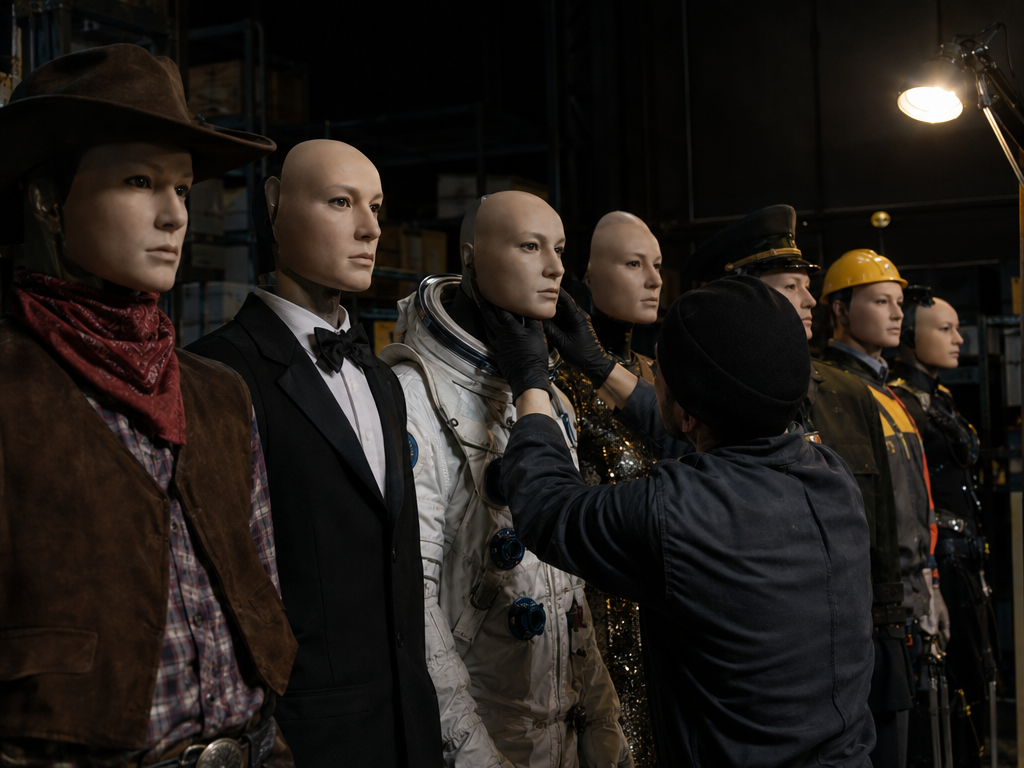
The deepfake weapon YouTube just handed all of Hollywood
This week YouTube did something that should keep a few people in deepfake production very nervous: it handed the entire entertainment industry its AI face-detection tool. CAA, UTA, WME are all in now. The implications for anyone working in branded content or creator partnerships are bigger than they first look.
Also: IAB officially declared creator advertising a core media channel (about time), the Sidemen's charity match pulled 12 million views in a weekend, and the Street Fighter 2026 trailer is everywhere.
Let's get into it.
- Shoshana, ThoughtLeaders COO
This week's deep dive
YouTube Just Built Content ID for Celebrity Faces
On April 21, YouTube opened its AI likeness detection tool to the entire entertainment industry. Until now, the capability was available to YouTube Partner Program creators and a small pilot group of journalists and politicians. The expansion brings in Hollywood's biggest gatekeepers directly: CAA, UTA, WME, and Untitled Management all contributed to the build and are now actively using it.
What does it actually do? Think Content ID, but for faces. A celebrity or their management uploads a likeness sample. YouTube's system scans continuously for AI-generated matches across all uploaded content. When it finds one, the rights holder can request removal, file a copyright claim, or do nothing. Parody and satire stay protected. Audio detection is coming next.
The timeline here is worth paying attention to. YouTube launched the first version for YPP creators in September 2025. It expanded to journalists and political figures in March 2026. Now it covers all of entertainment. Each expansion has followed a notable jump in AI video generation quality, meaning YouTube isn't getting ahead of this so much as keeping pace with it.
For branded content, the practical effect is that fake creator endorsements and AI-generated scam ads using a real person's face now have a clear removal pathway. That's been one of the legitimate objections to creator-led campaigns at scale. It doesn't disappear overnight, but there's now infrastructure around it. The risk profile for long-term creator partnerships just got a little more manageable.
The interesting detail is the agencies being inside the tent. CAA and WME didn't just get access to a finished tool. They helped build it. In past major platform rollouts, these conversations have typically happened without the major agencies in the room. This time they had seats. That's either because YouTube genuinely needs Hollywood's cooperation to make this work, or because Hollywood finally figured out how to get into the conversation early. Probably both.
Zooming Out
Synthetic media is moving fast enough that YouTube's identity infrastructure is now a real business consideration. The next version of this tool is audio detection. If you're working with voiceover talent or podcast creators, that's the update to watch closely.
The bigger shift: YouTube is building a defensive layer around human identity on the platform. When it's complete, it gives brands and creators a more solid foundation for long-term partnerships than they've had before. Identity protection is becoming infrastructure, not just policy.
The story behind the numbers
From Our Data
One News Cycle. Five Videos. 19 Million Views.
Jimmy Kimmel Live has 22 million subscribers and a TL projected view count of around 492,000 per video. Then Trump started publicly feuding with Pope Francis. Starting April 13, Kimmel published five consecutive monologue clips, each covering a new development in the same story. Every single one beat its projection by a wide margin.
Views per video vs. typical projection
Apr 13 · "Trump Attacks the Pope, Thinks He's Jesus"
4.58M · 9.3x
Apr 14 · "Trump Should Be the New Ayatollah"
3.23M · 6.6x
Apr 15 · "Trump Lashes Out at the Pope AGAIN"
3.91M · 7.9x
Apr 16 · "Trump Throws a Tantrum Over His Ballroom"
4.40M · 8.9x
Apr 20 · "Trump's Unnecessary War Drags On"
3.05M · 6.2x
← TL projected views for a typical Kimmel video: 492,228
Combined: 19,171,840 views across 5 videos. Average: 3.83M per video. Average overperformance: 7.8x.
Why it matters
YouTube's algorithm doesn't just reward individual viral moments. It rewards sustained topic momentum. Each time Kimmel published a new clip about this specific story, viewers who'd watched the previous one were more likely to get served the next. Search traffic from the ongoing news cycle fed each new video. Related video placement put all five in sequence for the same viewer. The result: a consistent 7.8x overperformance across five separate videos over eight days. Our model projected each video individually based on historical channel averages. The actual results show something the model doesn't capture: topic continuity is itself a multiplier. Creators who stay with a developing story across multiple videos don't just make one viral piece. They make a feed.
Links Roundup
Quick hits from across the web
→ The IAB's 2025 Internet Advertising Revenue Report landed this week with a headline the creator economy has been waiting years to hear: creator advertising is now a "core media channel," with spend hitting $37 billion in 2025 and projected to reach $44 billion in 2026. If you've been making the case internally for creator budget, this is the citation you've needed.
→ LA-based Fixated acquired Studio71's US creator business from ProSiebenSat.1, adding 1,000+ digital creators and a top-10 podcast network to its portfolio in one move. Backed by Eldridge Industries, Fixated has now absorbed CAMP Talent, Moondust Management, and Studio71 in quick succession. Creator management consolidation is happening fast.
→ YouTube is now letting users turn off Shorts entirely from the main feed, with a new "zero minutes" option in the Shorts Feed Limit settings that rolled out globally on iOS and Android on April 15. For a platform that's spent three years aggressively pushing Shorts as its growth engine, letting viewers opt out is a meaningful signal about where YouTube thinks long-form and short-form attention are heading next.
→ 50x50: Science Across America launched this week: 50 YouTube science creators, 50 researchers, all 50 US states, dropping as a video series in fall 2026 timed to the country's 250th anniversary. Hank Green, Destin Sandlin, Adam Savage, and others are involved. It's a rare example of coordinated mission-driven creator content at scale that isn't just a brand activation.
→ Creator management company Yoola launched a music distribution platform built specifically for video-first creators, with automated royalty splits, cross-platform distribution, and a 10-15% commission structure. It's aimed at Yoola's 4,000-artist network, but the architecture is notable: this is the creator-native music stack that traditional distributors have largely failed to build.
Add to your watch list
Creator on the Rise
Lumio
Animated Fan Fiction • 1.67M Subscribers • US
Rumi is the lead character from KPop Demon Hunters, Netflix's 2025 animated hit. Lumio has effectively built a fan-fiction universe around her — a serialised continuation of the story that's keeping fans invested between the original film and the Netflix sequel slated for next year. In February, "RUMI IS MISSING!" — a 23-minute mystery episode — hit 46.1 million views against a TL projection of 2.95 million, a 15.6x overperformance. This week, "Imposters with Rumi from KPop Demon Hunters!" posted 4.1 million views and kept the story arc going. For a 1.67M subscriber channel, those numbers are extraordinary. What makes Lumio worth watching: they've cracked the gap between official releases — the months or years when a fandom is hungriest for new content and the rights holder isn't shipping any. That's a pattern worth understanding. When an IP has a long wait between drops, the creators who serve that audience in the interim become gatekeepers to the fandom's attention.
Advertiser Spotlight
Brand Strategies Worth Stealing
Dove
Dove's Super Bowl 60 campaign "The Game Is Ours" aired in February. It's still worth talking about in April, which is the whole point. The 30-second spot about girls in sport and body confidence was paired with a creator program that's still running months later. Dawn Staley, Alyssa Thompson, Billie Jean King, and Kylie Kelce are all still active partners. The YouTube-anchored content tied to Dove's Self-Esteem Project and Body Confident Sport program continues to outperform paid media benchmarks from the original campaign window.
What Dove got right: the Super Bowl buy wasn't the campaign. It was the activation. Most brands treat the air date as the finish line. Dove treated it as the start. The creator machine they built around "The Game Is Ours" is still earning views and building brand association long after the media buy is paid off. That's what the IAB this week called an "always-on creator program," and it's consistently the model that outperforms the campaign-then-pause approach. If you're planning to spend on a cultural moment, make sure the creator program lasts longer than the moment does.
Trending on YouTube
What's going viral right now
One Piece: Elbaph Arc
The Elbaph Arc launched April 5 and is still driving massive weekly YouTube traffic. New episodes, the Robin/Jaguar D. Saul reunion, and the ongoing World Government plotline are generating constant fan reaction, episode analysis, and theory content. The arc has become one of the most reliable weekly traffic drivers in anime YouTube right now. Follow the reactions.
Artemis II Splashdown Keeps Climbing
The Artemis II crew returned to Earth on April 10, but NASA's 233-minute official splashdown broadcast has kept picking up views well after the event. It's now crossed 22.3 million views against a typical channel projection of just 251K. The first crewed lunar flyby in over 50 years has a long tail the algorithm clearly likes: two weeks after the broadcast, new viewers are still discovering it and watching the whole thing. Historic event coverage is one of the few formats where old uploads keep compounding long after the moment has passed. Watch the broadcast.
Sidemen Charity Match 2026
The Sidemen hosted their annual charity football match on April 18, and the 3.5-hour official stream pulled 12 million views, with the goals and highlights video adding another 5.4 million. The event format keeps proving itself: live events plus YouTube's long-form infrastructure equals consistent, outsized performance for the group every year. Watch the match.
Power Slap 19
Power Slap 19 aired April 18 and the channel had a monster week. The full event broadcast pulled 4.6 million views at 37.7x overperformance, but a single clip — "STILL HERE B*TCH!!!" — hit 8 million views on its own. Power Slap is one of the more counterintuitive YouTube success stories: a niche combat sport with an audience that shows up reliably and shares clips aggressively. For brands in sports, energy, and men's lifestyle, the engagement rates are worth a proper look. Watch Power Slap 19.
Street Fighter 2026 Movie Trailer
Sony dropped the official Street Fighter 2026 movie trailer this week to 19.2 million views, triggering the predictable but reliable wave of gaming reaction content, character breakdowns, and franchise deep dives. The Street Fighter fan base is one of YouTube's most dependable secondary content engines: every trailer generates weeks of derivative content well beyond the original view count. Watch the trailer.


